The global sports ecosystem is undergoing a seismic shift. Valued at over $500 billion, sports is no longer driven purely by passion; it is a sophisticated, technology-driven business reliant on institutional capital, data architecture, and multi-market expansion.
For aspiring leaders, bridging local ambition with global standards is essential to navigate this rapid transformation. Founded in Lausanne, Switzerland, the International Olympic Committee (IOC), alongside world-leading academic institutions like AISTS, has spent decades shaping the decision-makers of world sport.
To build a high-impact career and maximise your ROI, master these top 10 pivotal sports industry trends.
1. Enterprise AI and Hyper-Personalised Fan Engagement
Artificial intelligence has evolved from a novelty into a foundational operational layer for leagues, teams, and broadcasters worldwide. AI engines now process real-time biometric and optical tracking data to deliver hyper-personalised highlight reels, automated translation, and targeted in-stadium micro-transactions. Mastering AI workflows equips future executives to unlock unprecedented monetisation channels across global fanbases.
2. Institutional Capital and Private Equity Inflows
Sport is no longer a passion project for ultra-high-net-worth individuals; it is an institutional asset class. Private equity firms and sovereign wealth funds are executing strategic investments across North American leagues, European football, and the Indian Premier League (IPL). Candidates who master financial modelling, franchise valuation, and governance frameworks will accelerate their transition into high-stakes sports management roles.
3. Explosive Commercial Valuation of Women’s Sports
Women’s sport is experiencing rapid, double-digit commercial growth, breaking attendance records and capturing multi-million-dollar broadcast rights globally. Driven by standalone commercial strategies rather than packaged add-ons, properties like the WPL, NWSL, and WNBA offer dynamic opportunities in sports branding, sponsorship acquisition, and athlete management.
4. Smart Stadiums and Real Estate Sports Districts
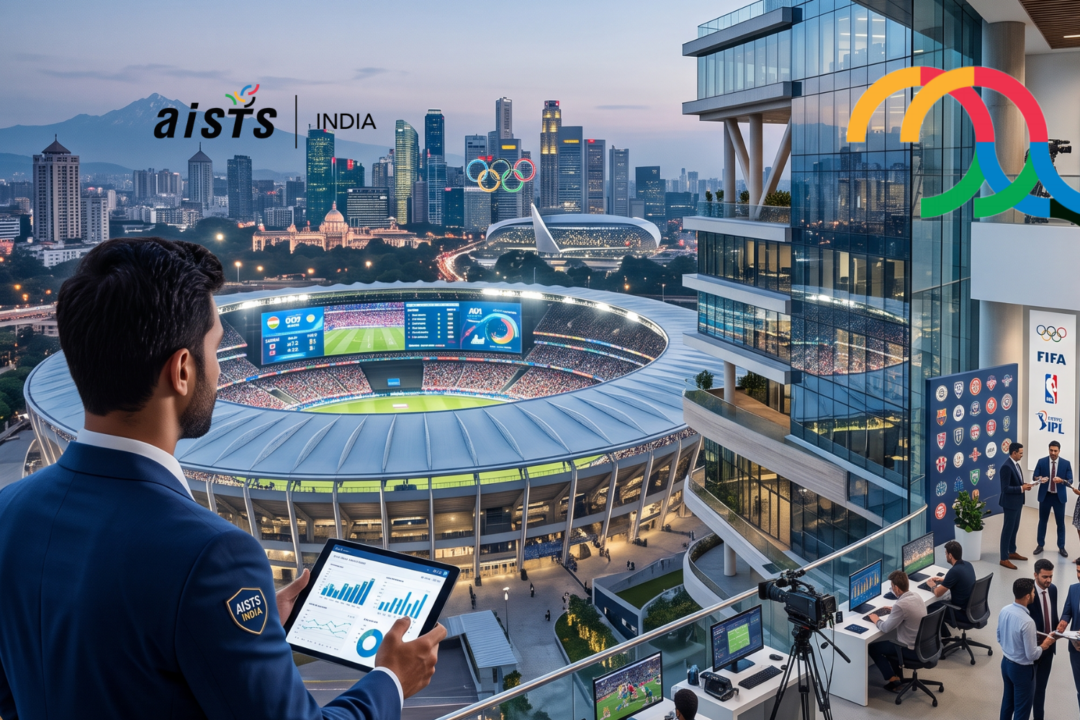
Venues are transforming into 365-day operational hubs. Modern venues leverage IoT devices, automated ticketing, and edge computing to generate revenue beyond matchdays. The global sports technology market, driven heavily by smart stadium deployments, is accelerating rapidly toward $100+ billion valuations. Future leaders must understand how smart infrastructure integrates with surrounding sports districts to drive sustained asset monetisation.
5. Advanced Biometrics and Data-Driven Athlete Management
The modern performance department operates like an applied tech lab. Wearable biometrics, computer vision, and predictive analytics monitor player workload, optimise tactical decision-making, and significantly reduce injury risk. Bridging the gap between on-field performance metrics and off-field business valuation is now a vital skill for modern team managers.
6. The Rise of Multi-Club Ownership (MCO)
From City Football Group to global multi-franchise cricket networks, ownership groups are acquiring stakes in multiple clubs across continents. This model optimises scouting pipelines, cross-promotes brands, and reduces operational overhead. Understanding international sports law, regulatory compliance, and cross-border management is essential for navigating these global networks.
7. Mandated ESG and Sustainable Mega-Event Operations
Sustainability is now a core operational metric required by international governing bodies such as the IOC, FIFA, and UEFA. Carbon-neutral stadium designs, circular supply chains, and social impact programs are built into major tournament bids. Professionals equipped with ESG management strategies will lead the operational execution of future global sporting events.
8. Fragmentation of Media Rights and Direct-to-Consumer (D2C) Streaming
Linear television is ceding ground to streaming platforms and direct-to-consumer (D2C) channels. Over-the-top (OTT) services are acquiring multi-billion-dollar live sports rights, prioritising interactive streams, gamified overlays, and integrated betting ecosystems over traditional broadcasts. To excel in rights negotiations, students must thoroughly understand audience segmentation and digital media economics.
9. Multi-Season Sponsorships and Value-Driven Partnerships
Brands are shifting away from short-term logo placements toward multi-season, purpose-led partnerships. Nearly half of global sports sponsors now require measurable metrics tied to community activation, digital interaction, and shared corporate values. Strategic partnership structuring is replacing simple sponsorship sales.
10. Globalisation of Regional Sports Franchises
Regional sports properties are rapidly building global footprints. IPL franchises are acquiring teams in South Africa, the UAE, and the US, while leagues like the NBA and NFL expand regular-season fixtures into Europe, Asia, and Africa. Talent capable of managing international expansion, foreign fan engagement, and global brand licensing is in high demand.
Elevate Your Career with AISTS INDIA
Navigating these trends requires more than theoretical understanding. It demands real-world industry immersion, exposure to elite faculty, and direct access to top global sports organisations.
The Postgraduate Programme in Sport Management & Technology at AISTS INDIA provides an exclusive curriculum endorsed by world-class standards. Featuring over 100 global experts from the IOC, FIFA, NBA, and IPL, hands-on Capstone Projects, and applied training in sports governance, law, and analytics, the programme equips you to lead the global sports ecosystem.
Ready to accelerate your career in the business of sport?
Click here to Check Your Eligibility for AISTS INDIA. Expert today to take the next step toward a global career.